
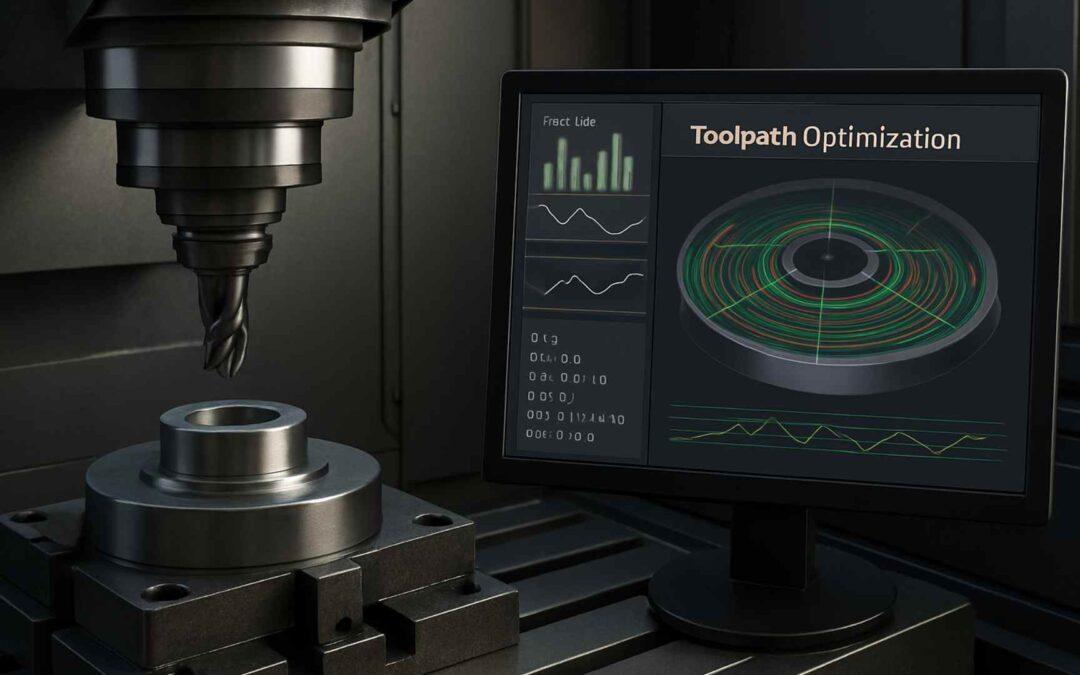
In the world of advanced manufacturing, 5-axis CNC machining has become a cornerstone for achieving complex geometries, faster cycle times, and superior precision. However, the true potential of 5-axis machinery can only be unlocked with well-engineered toolpath strategies. As manufacturers push for tighter tolerances and higher productivity, toolpath optimization is no longer a secondary consideration—it is a core requirement for staying competitive. Modern algorithms, simulation capabilities, and dynamic machining techniques now enable manufacturers to generate smoother, safer, and more efficient toolpaths that drastically improve surface quality while reducing machine wear. This article explores how optimized toolpaths elevate machining results, why they matter for complex part geometry, and how they align with today’s evolving best practices for smart manufacturing.
One of the biggest advantages of 5-axis CNC machining is its ability to maintain continuous tool engagement, allowing for better surface finishes and minimized manual finishing. However, achieving this depends heavily on the type of toolpath selected. Strategies such as swarf milling, 3+2 positioning, simultaneous 5-axis machining, and adaptive clearing offer unique benefits depending on part geometry and material. For instance, swarf milling leverages the side of the tool to machine large surfaces in a single, fluid motion, making it ideal for aerospace components with deep walls or tapered surfaces. By contrast, simultaneous 5-axis toolpaths allow the cutting tool to maintain optimal angles throughout the machining process, greatly reducing tool deflection and delivering more consistent results. Choosing the right strategy requires a deep understanding of the material, part design, and machine capability—but when done correctly, the result is a streamlined workflow that saves both time and cost.
Beyond selecting the right strategy, modern toolpath optimization also incorporates algorithm-driven enhancements that significantly improve machining performance. CAM software now uses advanced smoothing functions, automatic collision detection, and machine-specific kinematic simulations to refine tool movement before a single chip is cut. These digital checks prevent issues such as sudden axis reversals, unnecessary retracts, and aggressive plunge angles that could compromise surface quality or risk tool breakage. Additionally, feed rate optimization algorithms modify cutting speeds dynamically in response to curvature, material density, and engagement volume. This prevents overloads during steep transitions and maintains consistent chip thickness across complex surfaces. The result is not only higher accuracy but also longer tool life and improved spindle stability, which translates directly to cost savings in high-volume manufacturing.
Material selection also plays a crucial role in optimizing toolpaths for 5-axis machining. Hard-to-machine materials such as titanium, Inconel, and hardened steel impose their own challenges due to heat buildup and cutting resistance. To address this, machinists often rely on trochoidal milling techniques, high-efficiency machining (HEM), and optimized tool engagement strategies to maintain manageable cutting forces. Toolpath strategies that emphasize constant tool load significantly reduce the risk of thermal distortion and allow for more predictable wear patterns. Additionally, the choice of cutting tool—its geometry, coating, and flute design—must work hand-in-hand with the selected toolpath to achieve stable cutting conditions. When the material characteristics, tool geometry, and machining strategy align, manufacturers achieve smoother movements, fewer tool changes, and higher dimensional accuracy.
Another critical aspect of toolpath optimization involves machine dynamics and real-world performance constraints. Not all 5-axis machines handle rapid simultaneous motion with equal precision; factors such as controller response time, acceleration limits, and rotary axis sensitivity all influence the ideal toolpath strategy. High-speed machining (HSM) routines, for example, must account for machine rigidity and vibration tendencies. Modern CAM systems integrate machine-specific post processors that tailor the toolpath to the capabilities of individual machines, ensuring reliable performance without overshooting axis limits. By calibrating toolpaths to match machine behavior, manufacturers reduce cycle times, prevent mechanical strain, and ensure that complex motions remain accurate from start to finish. The difference between a generic and machine-specific toolpath can amount to hours saved per batch, particularly in industries such as automotive, aerospace, and mold-making.
Ultimately, optimizing toolpath strategies for 5-axis CNC machining is about more than improving cutting performance—it is about enabling smarter workflows, reducing operational risk, and creating consistent, high-quality parts. As CAM software evolves and machines become faster and more capable, the importance of sophisticated toolpath planning will only grow. Manufacturers who invest in advanced toolpath optimization gain a distinct advantage: they increase productivity without compromising accuracy, reduce wear on expensive machinery, and accelerate the transition from digital design to finished component. In a manufacturing environment where efficiency and precision define success, mastering modern toolpath strategies is no longer optional—it is essential for achieving world-class results.