
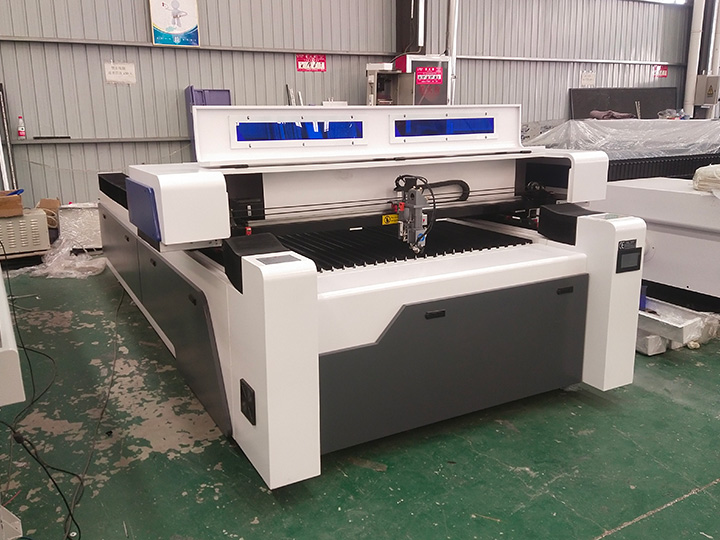
Hybrid CNC–laser processing has rapidly become a defining technology in the evolution of high-precision metal engraving, combining the mechanical strength and depth control of CNC machining with the speed, flexibility, and micro-detailing capability of laser systems. As industries demand increasingly intricate designs, tighter tolerances, and faster turnaround times, traditional standalone engraving methods often struggle to meet both aesthetic and functional requirements simultaneously. Hybrid systems solve this limitation by integrating subtractive cutting and non-contact laser engraving into a single synchronized workflow. This allows manufacturers to machine deep structural features using CNC tools while simultaneously applying ultra-fine surface engravings using focused laser beams without repositioning the workpiece. The result is unmatched accuracy, flawless alignment between cut features and engraved details, and a drastic reduction in production errors. This technological convergence is especially critical in sectors such as aerospace, automotive, medical devices, luxury goods, electronics, and industrial branding, where precision, repeatability, and surface integrity directly affect product performance and brand value. From serial numbers on aerospace-grade titanium to decorative micro-patterns on stainless steel and hardened tool steel, hybrid CNC–laser engraving delivers a level of control that was previously impossible with single-process systems.
A key advantage of hybrid CNC–laser processing lies in its ability to handle complex geometries and multi-depth engravings within a single automated cycle. Traditional engraving methods often require multiple setups, different machines, and extensive manual alignment, which introduce cumulative errors and increase production time. In contrast, hybrid machines use advanced multi-axis CNC platforms combined with fiber or ultrafast lasers that can engrave at micron-level precision immediately after mechanical machining. This enables seamless transitions between rough cutting, fine finishing, and micro-engraving without removing the part from the machine. For example, a mold insert for plastic injection can be CNC-milled to form precise cavities and then laser-engraved with micro-textures that influence airflow, fluid behavior, or visual appearance. The laser can also engrave high-resolution QR codes, logos, and traceability markings directly onto curved or uneven surfaces that would be difficult or impossible to engrave with mechanical tools alone. This capability not only enhances design freedom but also significantly lowers production risk, making hybrid CNC–laser engraving an ideal solution for both prototyping and mass production environments.
From a material performance perspective, hybrid CNC–laser processing offers exceptional versatility across a wide range of metals and alloys. Aluminum, stainless steel, titanium, brass, copper, hardened steel, Inconel, and even precious metals can be processed efficiently using the combined strengths of mechanical machining and laser energy. CNC machining ensures dimensional stability, edge strength, and deep material removal, while laser engraving introduces high-definition surface markings without applying physical cutting forces. This non-contact nature of laser processing is particularly important for delicate or thin-walled components where mechanical tools could cause deformation, micro-cracking, or burr formation. Additionally, modern fiber lasers provide exceptional energy efficiency and precision, allowing controlled heat input that minimizes the heat-affected zone and preserves the mechanical properties of the base material. This thermal stability is critical for applications such as medical instruments and aerospace components, where material integrity and surface chemistry must remain uncompromised. The combination of mechanical and photonic processing ensures that both macro-structure and micro-detailing can be optimized simultaneously.
Productivity gains represent another major benefit of hybrid CNC–laser engraving, particularly in high-mix, low-volume manufacturing and customized production. The ability to execute multiple operations in one setup dramatically reduces machine downtime, tool change frequency, and manual handling. This streamlined workflow improves lead times, lowers scrap rates, and increases overall equipment effectiveness. Advanced CAD/CAM software now allows engineers to program both CNC toolpaths and laser engraving paths within the same digital environment, ensuring perfect synchronization and collision avoidance. Real-time monitoring systems further enhance productivity by tracking laser power, spindle load, cutting temperature, and vibration, allowing intelligent process adjustments during operation. For manufacturers operating under Industry 4.0 frameworks, hybrid machines can be fully integrated into smart factory networks, enabling predictive maintenance, digital traceability, and full process data logging. These capabilities not only optimize day-to-day production but also provide valuable long-term insights for quality assurance, regulatory compliance, and continuous process improvement.
The commercial value of hybrid CNC–laser processing extends far beyond operational efficiency, especially in markets where branding, customization, and security features drive competitive differentiation. Laser engraving enables permanent, tamper-resistant markings such as serial numbers, barcodes, micro-text, and anti-counterfeiting patterns directly onto metal surfaces. When combined with CNC-machined structural features, manufacturers can deliver components that are not only functionally superior but also visually distinctive and fully traceable across global supply chains. In luxury goods manufacturing, hybrid engraving allows the creation of ultra-fine decorative patterns, personalized engravings, and high-contrast logos that enhance product exclusivity and perceived value. In industrial applications, deep CNC-engraved markings combined with high-resolution laser surface details ensure readability even in extreme environments involving heat, abrasion, chemicals, and mechanical wear. This dual-layer marking strategy significantly improves durability and lifecycle performance while strengthening intellectual property protection and brand authenticity in highly competitive markets.
Looking ahead, the future of hybrid CNC–laser processing for intricate metal engravings is being shaped by continuous advances in laser physics, machine automation, artificial intelligence, and digital manufacturing infrastructure. Ultrafast picosecond and femtosecond lasers are beginning to enter hybrid platforms, enabling “cold engraving” with virtually zero heat-affected zones and unprecedented micro-scale precision. AI-assisted process optimization is transforming how cutting and engraving parameters are selected, allowing machines to adapt in real time based on material behavior, tool condition, and thermal response. Meanwhile, cloud-based manufacturing systems and digital twins are enabling full simulation of hybrid processes before production begins, reducing development cycles and eliminating costly trial runs. As customization, miniaturization, and high-performance materials continue to dominate manufacturing trends, hybrid CNC–laser engraving is no longer a niche technology—it is becoming a core production strategy for companies that prioritize precision, speed, and design versatility. Businesses that adopt and master this integrated approach will gain a decisive advantage in producing next-generation metal components that meet the exacting standards of modern global industries.