
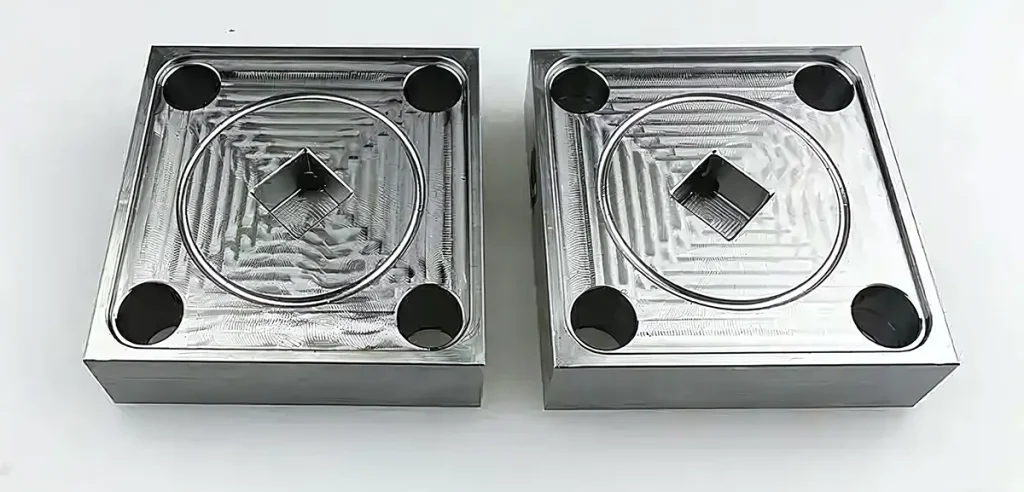
CNC machining tolerances have become one of the most critical factors in the successful production of medical-grade titanium implants. From orthopedic screws and hip stems to dental abutments and spinal cages, each component must meet exact specifications to ensure long-term biocompatibility, structural stability, and patient safety. Titanium alloys such as Ti-6Al-4V (Grade 5) and commercially pure titanium (Grades 2 and 4) demand exceptional precision because their mechanical behavior, corrosion resistance, and compatibility with human tissue rely heavily on surface integrity and dimensional accuracy. Even a microscopic deviation from the intended dimensions can compromise osseointegration, affect implant fit, or create stress concentrations that lead to failure over time. Because of this, medical manufacturers rely on advanced CNC machining systems that can achieve ultra-tight tolerances, often in the range of ±0.005 mm to ±0.01 mm, depending on the implant type and regulatory requirements. These machining tolerances ensure that implants achieve the exact contours needed to match anatomical structures and function properly within the human body.
Modern CNC machining for titanium implants also relies heavily on advanced toolpath strategies, precision cutting tools, and controlled machining environments to maintain consistent tolerances across large production volumes. Titanium is known for being strong yet notoriously difficult to machine due to its low thermal conductivity and high reactivity at elevated temperatures. This makes the material susceptible to heat buildup, tool wear, and deformation if improper machining strategies are used. To address these challenges, manufacturers deploy high-speed machining centers equipped with rigid spindles, flood coolant systems, and multi-axis control that maintains stability even under demanding cutting conditions. These systems are designed to resist vibration and thermal drift, two of the primary factors that can cause tolerance deviations. Through adaptive machining technology, real-time feedback, and dynamic tool compensation, CNC machines can automatically adjust feed rates and spindle speeds to maintain micron-level accuracy throughout the production cycle. Such innovation is essential in ensuring that medical implants meet the standards set by ISO 13485, FDA regulations, and other global medical device certification systems.
Another essential factor in achieving reliable CNC machining tolerances for medical-grade titanium implants is the integration of CAD/CAM software with advanced simulation and verification tools. Manufacturers begin with high-resolution 3D models that define the required geometries, tolerances, and surface finishes for each implant. These models are translated into toolpaths using CAM software that accounts for material behavior, tooling characteristics, and machine capabilities. Before machining begins, digital simulation tools analyze the toolpaths to detect potential collisions, overcuts, thermal concentration zones, and areas where tolerance drift may occur. This virtual testing process dramatically reduces risk, scrap rates, and costly rework. Once validated, the machining program is executed with high precision, and the laser-based or contact-based metrology systems are used to verify tolerances. Coordinate measuring machines (CMMs), optical scanners, and surface profilometers allow manufacturers to inspect implants down to the micron level, ensuring each component aligns perfectly with the original design. This closed-loop verification system has become a fundamental part of modern medical manufacturing, allowing for greater consistency and reliability in titanium implant production.
The importance of ultra-tight CNC machining tolerances extends beyond structural accuracy—surface finish is equally critical in medical implants. Titanium implants must have surfaces optimized for osseointegration, meaning they must allow bone cells to attach and grow securely around the implant. CNC machining plays a vital role in preparing the initial surface before additional treatments such as sandblasting, acid etching, anodizing, or plasma spraying. Even before these secondary processes, the machined surface must remain free from burrs, micro-cracks, and thermal damage, as these imperfections can interfere with bone growth and integration. CNC machining tolerances directly influence surface texture, flatness, and concentricity, all of which impact the performance of orthopedic and dental implants. In applications such as bone screws and surgical anchors, thread accuracy is crucial for stability and torque performance, requiring exceptionally controlled machining operations. For joint replacement components, tolerances must ensure smooth articulation and prevent wear particles that could lead to inflammation or implant loosening. In every case, achieving the correct tolerances is not merely a matter of technical capability—it directly contributes to clinical outcomes for patients worldwide.
From a production and cost-efficiency perspective, maintaining consistent CNC machining tolerances for medical-grade titanium implants reduces waste, enhances repeatability, and strengthens quality assurance throughout the supply chain. Titanium is an expensive material, and implant blanks are often costly to source and prepare. Precise machining helps minimize scrap rates and extend tool life, especially when using specialized cutting tools coated with diamond-like carbon or TiAlN. Toolpath optimization, reduced machine downtime, and automated quality control further streamline the manufacturing workflow. In an industry where traceability and documentation are mandatory, consistent machining tolerances simplify regulatory compliance and reduce the risk of recall. Manufacturers can integrate machining data into digital traceability systems, allowing each implant to be linked to its corresponding material lot, machining program, inspection record, and operator oversight. This level of control aligns with the increasing adoption of digital manufacturing standards and supports the broader shift toward Industry 4.0 in medical device production.
As medical technology evolves, the demand for higher-precision titanium implants continues to grow—especially in fields such as robotic surgery, custom orthopedic solutions, minimally invasive devices, and patient-specific implants (PSIs). CNC machining tolerances play an integral role in enabling these advancements. Additive manufacturing has also entered the medical sector, but CNC machining remains essential for final finishing, refinement, and tolerance control, especially for titanium implants produced through metal 3D printing. The hybrid combination of CNC machining and additive technologies is emerging as a powerful approach, allowing complex lattice structures and anatomical geometries to be produced with the accuracy and surface quality required for surgical implantation. Whether manufacturing spinal cages with intricate porous structures or dental implants that must integrate seamlessly with existing anatomy, CNC machines continue to set the benchmark for precision in titanium implant production. The capability to achieve reliable, repeatable, and exceptionally tight tolerances ensures that medical-grade titanium implants remain safe, effective, and capable of supporting the next generation of advancements in modern healthcare.