
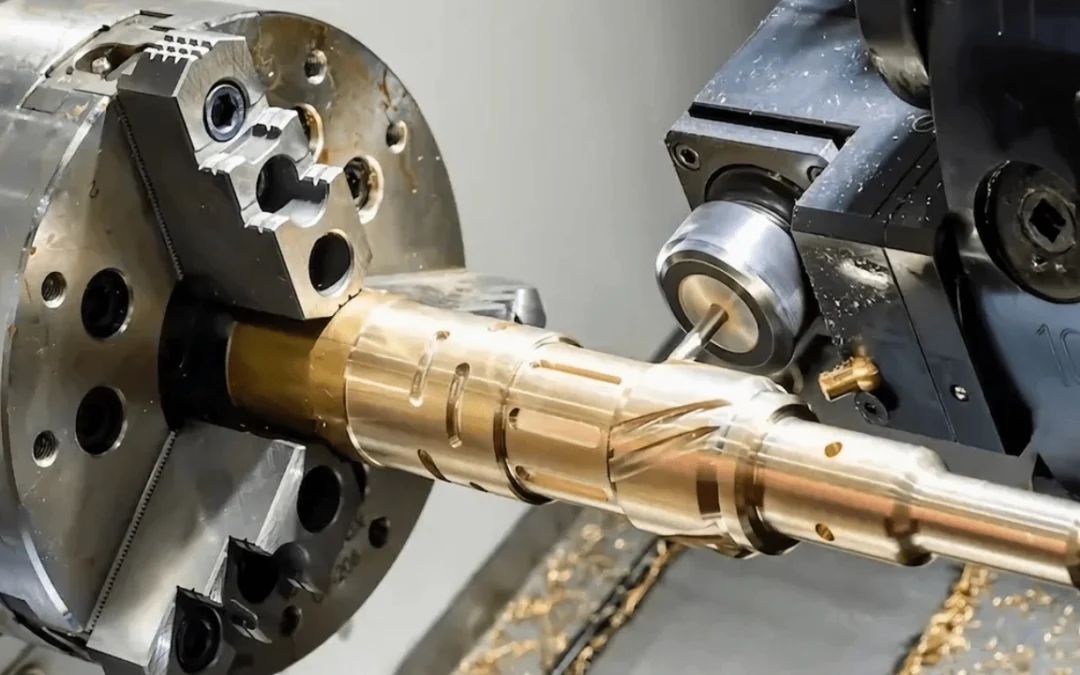
Achieving ultra-fine surface finishing through CNC lathe programming is no longer just a competitive advantage—it has become a strict requirement for manufacturers operating in aerospace, medical devices, precision tooling, and high-tolerance automotive components. As global demand for flawless surface integrity continues to rise, the need to master advanced CNC programming techniques has never been more crucial. Ultra-fine finishing requires not only state-of-the-art machinery but also a deep understanding of tool paths, feed-rate optimization, spindle-speed modulation, and cutting-tool geometry. Modern SEO-driven searches reveal that engineers and production managers are increasingly looking for reliable, technical content that highlights the steps, methods, and accuracy benchmarks needed to achieve nanometer-level smoothness. This article explores how cutting-edge CNC lathe programming techniques shape surface quality, how tool control has evolved through automation and smarter algorithms, and how manufacturers can integrate updated machining strategies to meet strict modern standards.
The foundation of ultra-fine surface finishing lies in a combination of precise tool movement and optimized process parameters. Programming techniques such as constant surface speed control (CSS), micro-increment tool stepping, and adaptive feed-rate adjustments ensure that the cutting tool maintains uniform engagement throughout the turning cycle. A consistent surface texture requires minimal tool vibration, predictable chip formation, and extremely stable radial pressure between the tool and the workpiece. Smoothness at the sub-micron level is achieved not only through parameter tuning but also through specific motion commands such as G70 finishing cycles, G71 roughing cycles with controlled depth of cut, and G76 threading cycles with precision finishing passes. These cycles are essential when programmers need to eliminate tool marks and residual ridges left behind during roughing operations. Additionally, the shift toward high-precision servo motors and linear encoders allows the lathe to execute programmed movements with astounding accuracy, ensuring that each pass contributes to a progressively smoother surface profile.
To enhance surface quality even further, manufacturers rely on specialized cutting tools engineered for micro-finishing. PCBN (polycrystalline cubic boron nitride) and PCD (polycrystalline diamond) inserts are often the preferred choice for non-ferrous materials, hardened steels, and super-alloys because of their ability to maintain sharp cutting edges at high temperatures. However, the programming strategy must complement the tooling choice. The correct approach includes reducing feed rates to as low as 0.005 mm/rev, using positive rake angles to minimize friction, and maintaining stable heat distribution along the cutting edge. Another vital aspect of CNC lathe programming is controlling tool retraction paths to prevent back-cutting or accidental tool engagement with the finished surface. This is where advanced CAM simulation becomes useful: digital twin environments allow programmers to identify potential surface flaws before machining begins, ensuring high finish quality on the first run. The synergy between tool selection and precise G-code modification is what enables manufacturers to achieve mirror-like finishes without relying on manual polishing.
As modern CNC lathes integrate AI-assisted optimization and real-time feedback systems, manufacturers gain the ability to refine surface finishing on the fly. Machine learning algorithms can analyze spindle load, tool wear, vibration signatures, and temperature fluctuations to recommend micro-adjustments in feed and speed. These real-time corrections dramatically reduce rework, scrap rates, and cycle time while maintaining surface roughness values as low as Ra 0.1 µm. Updated CNC control software has evolved to automatically adjust tool pressure and compensate for insert wear, ensuring consistent surface texture across long production cycles. Furthermore, integrated probing systems measure dimensional accuracy during machining and allow the program to trigger corrective adjustments instantly. This level of automation ensures a flawless surface finish even in high-volume production environments, where consistency from part to part is critical.
The influence of environmental and operational factors also plays a significant role in CNC lathe finishing quality. Coolant flow, machine rigidity, thermal expansion, and spindle stability must be carefully controlled to prevent unwanted imperfections. Through advanced programming, manufacturers now use variable-pressure coolant delivery systems to enhance chip evacuation and minimize heat transfer into the workpiece. Moreover, machine warm-up cycles and thermal compensation codes ensure that temperature variations do not distort the workpiece geometry or compromise the finishing process. Smart scheduling—machining parts during stable ambient conditions—can further improve consistency. Combined with predictive maintenance analytics, manufacturers can identify potential machine-related issues that could affect surface finishing, such as worn spindle bearings or degraded ball screws, before they cause measurable defects.
In the future, ultra-fine surface finishing through CNC lathe programming will become even more refined as automation, data analytics, and advanced cutting materials evolve. The integration of closed-loop adaptive machining will likely replace conventional fixed-parameter programming, enabling CNC lathes to self-regulate during finishing cycles with unprecedented precision. Moreover, as industries demand increasingly flawless finishes for micro-mechanics, miniature medical implants, and semiconductor components, high-resolution tool-path algorithms will continue to advance. Manufacturers who invest in cutting-edge CNC programming methodologies today will position themselves at the forefront of global production standards, delivering superior surface quality while reducing operational costs. Ultimately, mastering the programming principles described above allows companies to achieve the ultra-fine finishes required in modern manufacturing, ensuring long-term competitiveness in a precision-driven world.