
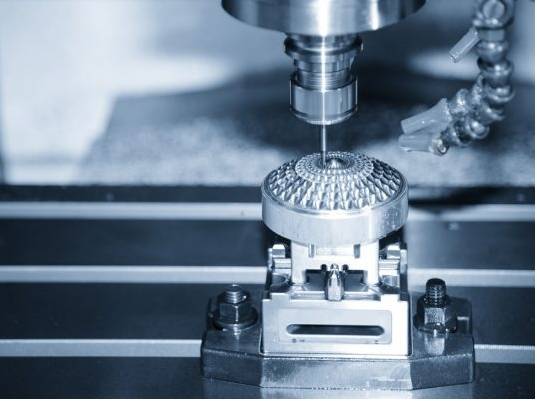
Precision micro-milling has emerged as one of the most critical manufacturing techniques for producing complex CNC components with extremely tight tolerances and intricate geometries. As industries such as aerospace, medical devices, electronics, and automotive engineering continue to push the boundaries of miniaturization and functional integration, conventional machining methods are no longer sufficient on their own. Micro-milling enables manufacturers to create features measured in microns while maintaining outstanding surface finish, dimensional accuracy, and repeatability. Unlike traditional CNC milling, which typically focuses on robustness and material removal rates, micro-milling is centered on stability, tool integrity, vibration control, and thermal management. At this scale, even minor deviations in spindle speed, tool runout, or material hardness can result in dimensional inaccuracies or tool failure. Therefore, achieving consistent results in precision micro-milling requires not only advanced CNC machinery but also deep process knowledge, optimized tooling strategies, and sophisticated control systems that account for the unique physics of cutting at the micro level.
One of the defining aspects of precision micro-milling is the specialized tooling involved in the process. Micro end mills, often with diameters ranging from 0.05 mm to 1 mm, are engineered from ultra-fine grain carbide or coated with advanced materials such as diamond-like carbon (DLC), titanium aluminum nitride (TiAlN), or polycrystalline diamond (PCD). These tools must maintain exceptional sharpness while withstanding high rotational speeds that often exceed 50,000 RPM. Tool geometry becomes far more critical at this scale, as rake angle, helix angle, and edge preparation directly influence chip formation and cutting stability. Any imperfections in tool balance or concentricity can generate runout that exceeds the actual depth of cut, making precision control nearly impossible. Moreover, tool wear behaves differently in micro-milling compared to conventional machining. Instead of gradual flank wear, micro-tools are more prone to chipping and sudden fracture. As a result, predictive tool monitoring, real-time spindle load analysis, and consistent tool inspection protocols become mandatory for organizations aiming to maintain high throughput without sacrificing accuracy.
Material selection and behavior also play a decisive role in determining the success of micro-milling operations. At the micro scale, materials often exhibit size-dependent mechanical properties that differ significantly from their bulk behavior, a phenomenon known as the “size effect.” For instance, materials such as titanium alloys, stainless steel, and nickel-based superalloys can display increased cutting resistance relative to the tool size, leading to higher specific cutting forces and greater tool stress. Similarly, brittle materials like ceramics or hardened steels may exhibit micro-cracking rather than smooth chip formation if the cutting parameters are not carefully optimized. Polymers and composites introduce yet another layer of complexity due to their elastic recovery and thermal sensitivity. To address these challenges, engineers must precisely tailor spindle speeds, feed rates, depth of cut, and coolant strategies to each specific material. Cryogenic cooling, minimum quantity lubrication (MQL), and high-pressure micro-coolant delivery systems are increasingly adopted to control temperature, minimize tool wear, and prevent material adhesion that can compromise surface integrity.
Process stability is another cornerstone of successful precision micro-milling for complex CNC components. At such small scales, even minimal vibration can cause chatter marks, dimensional inaccuracies, or catastrophic tool failure. Advanced CNC machines designed for micro-milling typically feature hybrid or air-bearing spindles, ultra-rigid machine structures, and high-resolution linear motor drives with nanometer-level positioning accuracy. Thermal stability is equally crucial, as temperature fluctuations of just a few degrees can lead to measurable expansion in machine components, adversely affecting part accuracy. To mitigate these risks, modern micro-milling environments often employ temperature-controlled enclosures, real-time thermal compensation algorithms, and closed-loop feedback systems that continuously adjust tool position based on sensor data. In addition, advanced CAM software plays a vital role in generating optimized tool paths that minimize sudden directional changes, reduce cutting forces, and maintain constant tool engagement. This level of digital precision ensures that complex geometries such as micro-channels, miniature gears, medical implants, and high-frequency electronic housings can be produced with consistent quality at scale.
Surface finish and dimensional integrity are among the most critical quality indicators in precision micro-milling, especially for industries where performance and safety are non-negotiable. Medical implants, for example, require not only micrometer-level dimensional accuracy but also flawless surface finishes to ensure biocompatibility and proper interaction with biological tissues. In electronics, microscopic burrs or surface irregularities can disrupt electrical conductivity or lead to premature component failure. Achieving superior surface quality requires meticulous control over cutting parameters, tool sharpness, and machine dynamics. Techniques such as ultra-light finishing passes, trochoidal tool paths, and adaptive feed rate control are commonly employed to minimize surface defects. Post-processing steps such as micro-polishing, laser surface texturing, and chemical deburring may also be applied when necessary, but the ultimate goal of modern micro-milling is to achieve near-finished surface quality directly from the machine. This reduces secondary operations, shortens production cycles, and significantly improves overall manufacturing efficiency.
The future of precision micro-milling is being shaped by rapid advancements in automation, artificial intelligence, and digital manufacturing ecosystems. Smart CNC machines equipped with AI-driven process optimization can now analyze cutting forces, vibration patterns, spindle load, and tool wear in real time, automatically adjusting parameters to maintain optimal cutting conditions. Digital twins of micro-milling processes allow engineers to simulate machining strategies before a single tool touches the workpiece, dramatically reducing trial-and-error costs. Additionally, the integration of Industry 4.0 principles enables full traceability of components, from raw material selection to final inspection, ensuring consistent quality and compliance with stringent international standards. As product designs continue to evolve toward greater complexity and miniaturization, the demand for precision micro-milling techniques will only intensify. Manufacturers that invest in advanced equipment, skilled operators, and data-driven process optimization will be best positioned to lead this highly specialized and rapidly growing segment of CNC manufacturing.